


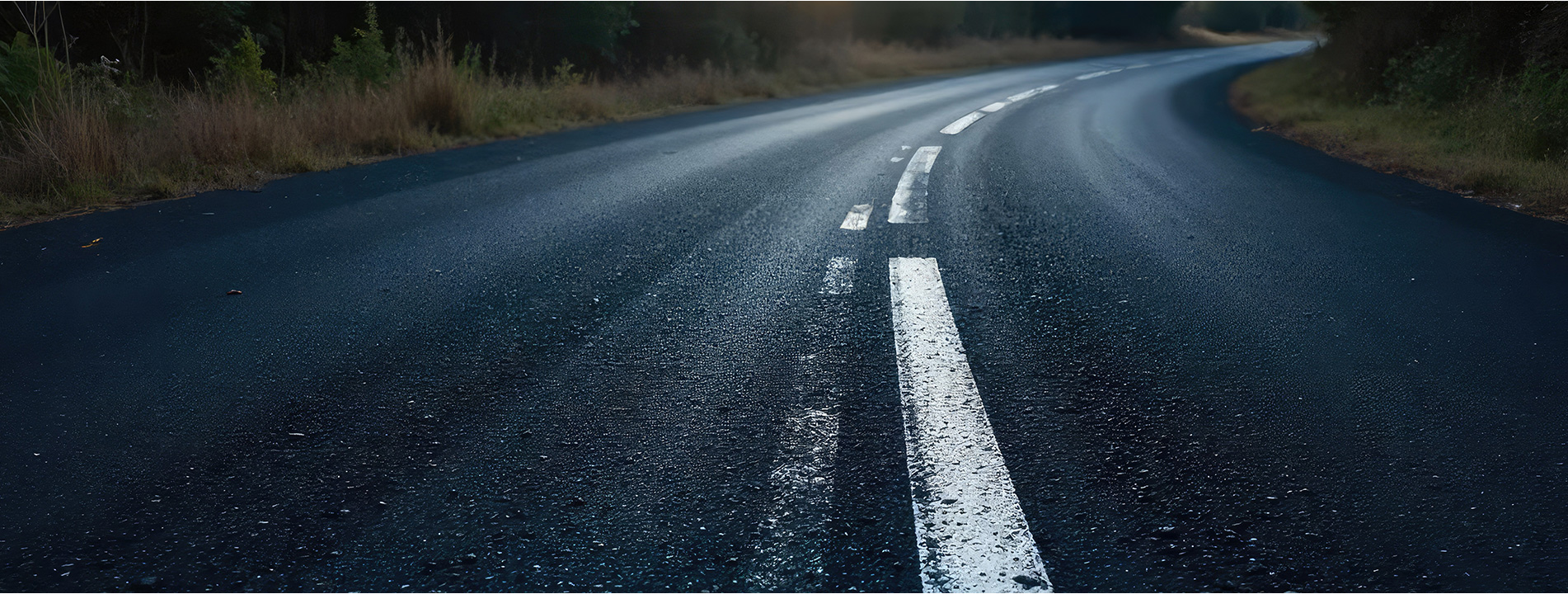
Road markings across Britain are fading at an alarming rate, with new RAC research showing that many drivers believe the problem has worsened significantly in recent years and is making journeys more dangerous.
More than a fifth of drivers (21%) say most road markings in their local area have faded away, while a further 71% report that at least some markings are no longer clearly visible. Nearly three-quarters (72%) believe the issue has become worse over the last five years, and 92% say deteriorating markings have increased the risk of danger on the roads.
The markings most commonly reported as having disappeared are the centre lines that divide lanes of traffic, including solid, broken and double white lines. Half of drivers (50%) say these are the most frequently faded, but other key guidance markings are also being lost, with 48% saying directional arrows at roundabouts and junctions have worn away and 44% reporting that give-way markings are no longer clear.
Drivers also point to fading yellow box junction markings (43%), stop lines at junctions (41%) and speed limit roundels painted on the road surface (36%). Additional markings are said to be disappearing rapidly, too, including hatched areas separating lanes or protecting turning zones (29%), zebra crossing stripes (24%), bus and cycle lane markings (22%), and cycle boxes or advanced stop lines at traffic lights (17%).
The impact is being felt behind the wheel, with almost two-thirds of drivers (63%) saying faded markings have forced them to guess lane positions, while 38% say they have ended up in the wrong lane as a result. Around one in five (19%) report having been beeped at or confronted by another road user due to confusion caused by missing markings, and the same proportion say they have had to cut across lanes at short notice. Sixteen per cent say they have experienced a near-miss, and 13% report overshooting a junction because they could not see stop or give-way lines.
There is strong support for action, with 84% of drivers saying road safety in their area would improve if markings were repainted, and 91% wanting local authorities to do a better job of keeping them visible. Separate research for the RAC Report on Motoring ranks faded markings and poor drainage as the joint second biggest road safety concerns after potholes.
RAC head of policy Simon Williams said “Drivers are widely reporting that road markings have been left to fade into obscurity, making roads less safe as a result. The problem appears to have got progressively worse as a majority of drivers say the visibility of markings has deteriorated in the last five years. And, while all painted lines are important to ensure drivers do the right thing, the fact some, such as those dividing lanes and even stop lines are disappearing, is troubling.
While the Government has just published the country’s first road safety strategy in more than a decade, this is one key area that shouldn’t be forgotten. We urge them to work with councils to rectify this situation, as markings are painted onto the road for good reason: to keep drivers and other road users safe by clearly informing them of what they should and shouldn’t be doing.
It’s frightening to think almost one-in-five of drivers have had a near-miss as a result of faded road markings and more than one-in-10 have overshot a junction. Leaving these most vital markings to just wear away makes no sense whatsoever. While there’s clearly a cost to maintaining them, the cost of letting them disappear doesn’t bear thinking about.”